Bucquoy Road Cemetery
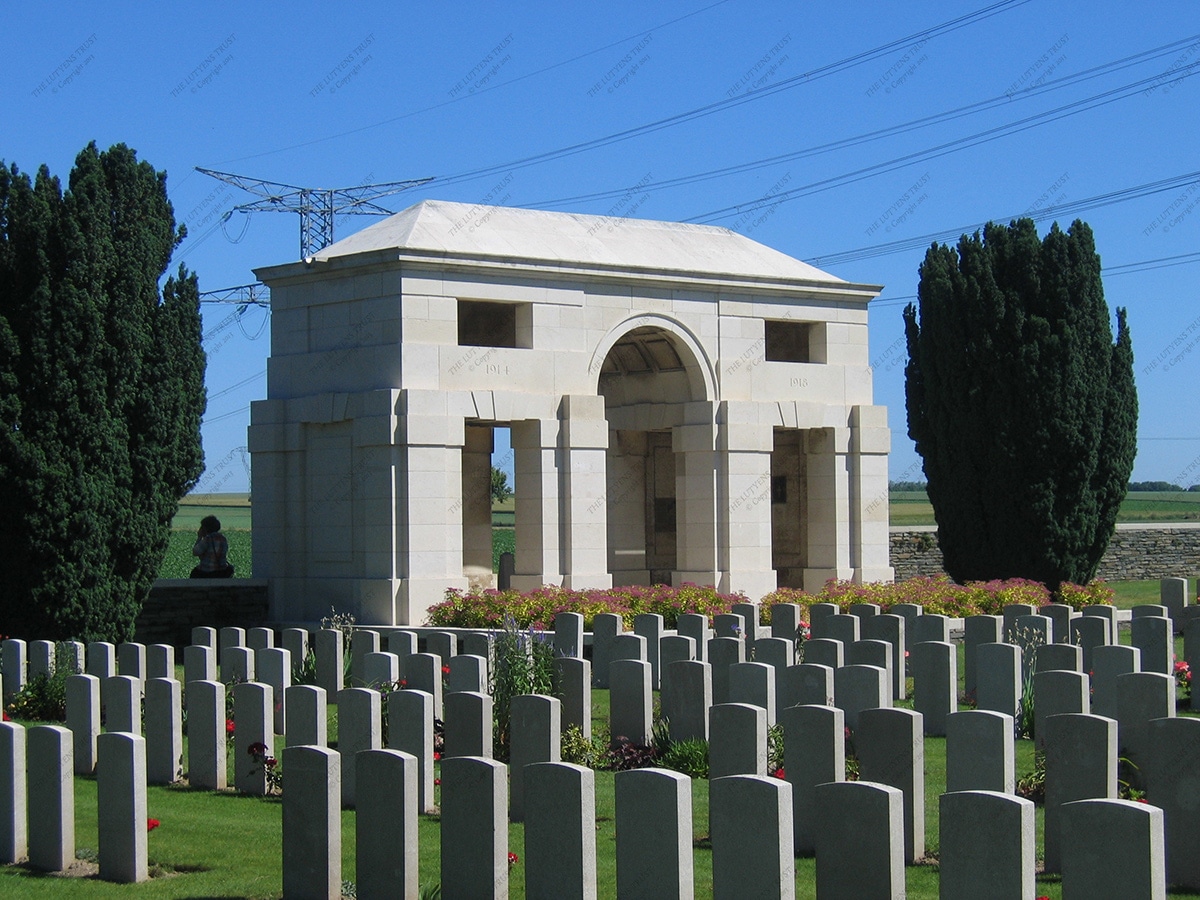
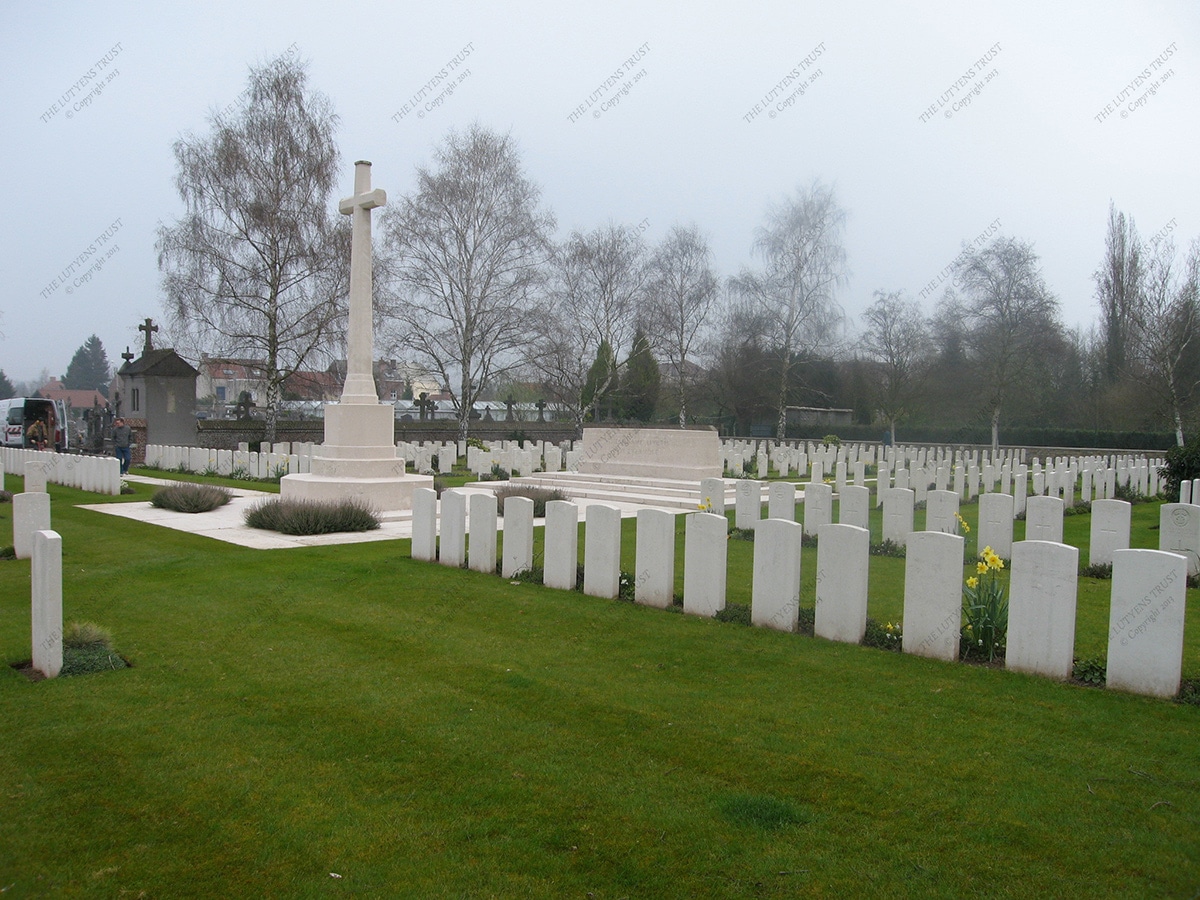
The Bucquoy Road Cemetery, begun by field ambulances and later extended after the Armistice and again in the Second World War, is a triangular, sloping site where long and short grave rows are overseen from a raised plateau carrying the War Stone and Cross of Sacrifice, partly framed by limes and shrub‑planted terraces.
Description
The cemetery was begun by field ambulances and later used by various Casualty Clearing Stations installed in the vicinity for the Battle of Arras. After the Armistice, the cemetery was extended with graves that were transferred from the battlefield and from small cemeteries in the neighbourhood. The cemetery was again used in the Second World War.
The field with graves consists of two parts. The first graves lie in long rows in plots i and ii at the front, to the left, near the road. After the war, this field was extended toward the rear with short rows of graves with two extra through paths. The second part consists of a long plateau on which the War Stone and the Cross of Sacrifice have been placed. During the Second World War, graves were added on the plateau between the Cross of Sacrifice and the War Stone. Unfortunately, these graves block off the axis between both ends.
The large field with graves is triangular, with its highest point next to the road. It descends toward the rear and toward the plateau side that is partly at the same height as the field. From the road, the plateau can be accessed via two steps between which there is a landing with a decorative brick structure. Beside the stairway, there are two beds with shrubs adjoining the War Stone. A bench and the land tablets have been incorporated into the right-hand side of the plateau. At the Cross of Sacrifice, the plateau lies higher than the field and it is accessible via a stairway between two plant beds. A special memorial is situated behind the Cross of Sacrifice and there are several trained lime trees as a background to the Cross of Sacrifice. (Geurst, 2010, p.232)
Bibliography
Geurst, J. (2010) Cemeteries of the Great War by Sir Edwin Lutyens. Rotterdam: 010 Publishers.
,